
Classic Solitaire
Your table. Your pace. A fresh challenge in every deal.
Play classic Solitaire online with a familiar 52-card deck and a table you can make your own. Also known as Klondike, the game is about uncovering hidden cards, building alternating-color sequences and moving every suit from Ace to King. Start with Draw 1 to learn the rhythm, or choose Draw 3 for a different challenge. Whether you have time for one quick deal or want to work through a difficult position, SLTR keeps your cards, controls and progress close at hand.
Key Features
A familiar game, with room to improve
Choose Draw 1 or Draw 3, move cards with a click or a drag, and use Undo to revisit a decision. Hints can point out an available move when you need a fresh look at the board. An available move is a starting point for your next decision, not a promise that the deal can be finished.
Make the table comfortable
Choose a card face you can read easily, a card back you like and a table background that suits you. The same deck and table appear in the illustrated rules below. You can also switch the layout for left-handed or right-handed play in the game settings.
A seed gives a deal its identity
A seed is the number used to reproduce the shuffle. Share a deal link and another player can start with the same cards and game mode. Restarting that deal lets you try a different route through the same puzzle instead of getting a new shuffle.
SLTR’s verified deal pool is built from recorded player wins that pass replay checks. This gives those deals evidence of a winning route. A fresh random deal has no such guarantee, and a seed alone does not tell you how difficult a game will feel.
Keep track of your own progress
Use your statistics to look back at your games, wins and playing time. Replay a position to understand a mistake, take on the daily challenge, or try Spider Solitaire and FreeCell from All Games when you want a change of rules.
Game Modes
Draw 1: see one new card at a time
Each tap on the stock turns one card onto the waste pile. Every newly drawn card is immediately available, so you can focus on uncovering the tableau and learning which moves open up space. Draw 1 is a useful place to start, but a difficult shuffle can still require careful planning.
Draw 3: pay attention to the order
Each tap turns up to three cards onto the waste pile. Only the exposed top card can be played. Moving it may uncover another useful card underneath; leaving it in place can keep that card blocked. Remember the cards you have seen and check what changes when you cycle through the stock again.
The mode and the deal are different choices
Draw 1 and Draw 3 change how you reach the stock cards. The seed determines the shuffle. Even within one mode, some deals reveal helpful cards early while others demand more preparation. A verified winnable deal means that a winning route has been recorded, not that every choice of moves will succeed.
Rules


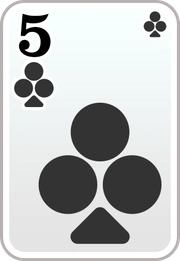
Build down in alternating colors: a black 7, a red 6, then a black 5.



Build each foundation in one suit, from Ace to King: A ♥, 2 ♥, 3 ♥…

Only a King, alone or leading a valid sequence, can fill an empty column.



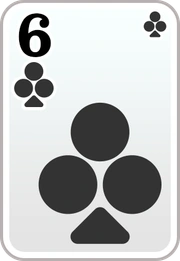
In Draw 3, only the exposed card is playable. Here, it is the 6 ♣.
The goal: four complete foundations
Move all 52 cards onto the four foundations. Each foundation holds one suit and starts with its Ace, followed by 2, 3 and the remaining ranks up to the King. You win when all four piles are complete.
How the cards are dealt
The tableau has seven columns, containing one to seven cards from left to right. That puts 28 cards on the table. Only the exposed card in each column starts face up; the other 24 cards form the stock. As you remove cards covering a face-down card, it turns face up and becomes available.
Build down in the tableau
Place a card on one that is exactly one rank higher and the opposite color. For example, a red 6 can go on a black 7. A black 6 cannot go on that black 7, and a red 5 cannot skip directly onto it. Hearts and diamonds are red; spades and clubs are black.
You may move a whole face-up sequence together when its ranks descend one by one and its colors alternate. If you move a 6–5–4 sequence, the 6 must fit the destination card.
Leave room for a King
An empty tableau column can receive only a King, either on its own or at the head of a valid sequence. Before clearing a column, look for a King that can use the space and consider which hidden card the move would reveal.
Build up on the foundations
An Ace begins an empty foundation. Add the 2 of that same suit, then the 3, and continue upwards. For example, 2 ♥ goes on A ♥, not on A ♠. You do not need to finish one foundation before starting another.
Use the stock and waste
Tap the stock to turn over one or three cards, depending on your mode. Only the top card of the waste can move to the tableau or a foundation. In Draw 3, the visible cards underneath must wait until the cards above them have been played. Once the stock is empty, recycle the waste to go through the remaining cards again.
When the board feels blocked
Check the stock as well as the tableau before deciding that you have run out of options. Moving a card to a foundation, uncovering a waste card or revisiting an earlier choice can change what is available. A position with no useful move is not proof that the original deal was impossible.
Three habits to practise
- Look for moves that uncover face-down cards before making moves that only rearrange visible ones.
- Keep useful low cards available in the tableau if moving them to a foundation would prevent another sequence from moving.
- Before drawing again, scan for an Ace you can free, a King that needs space or a sequence that can reveal a hidden card.